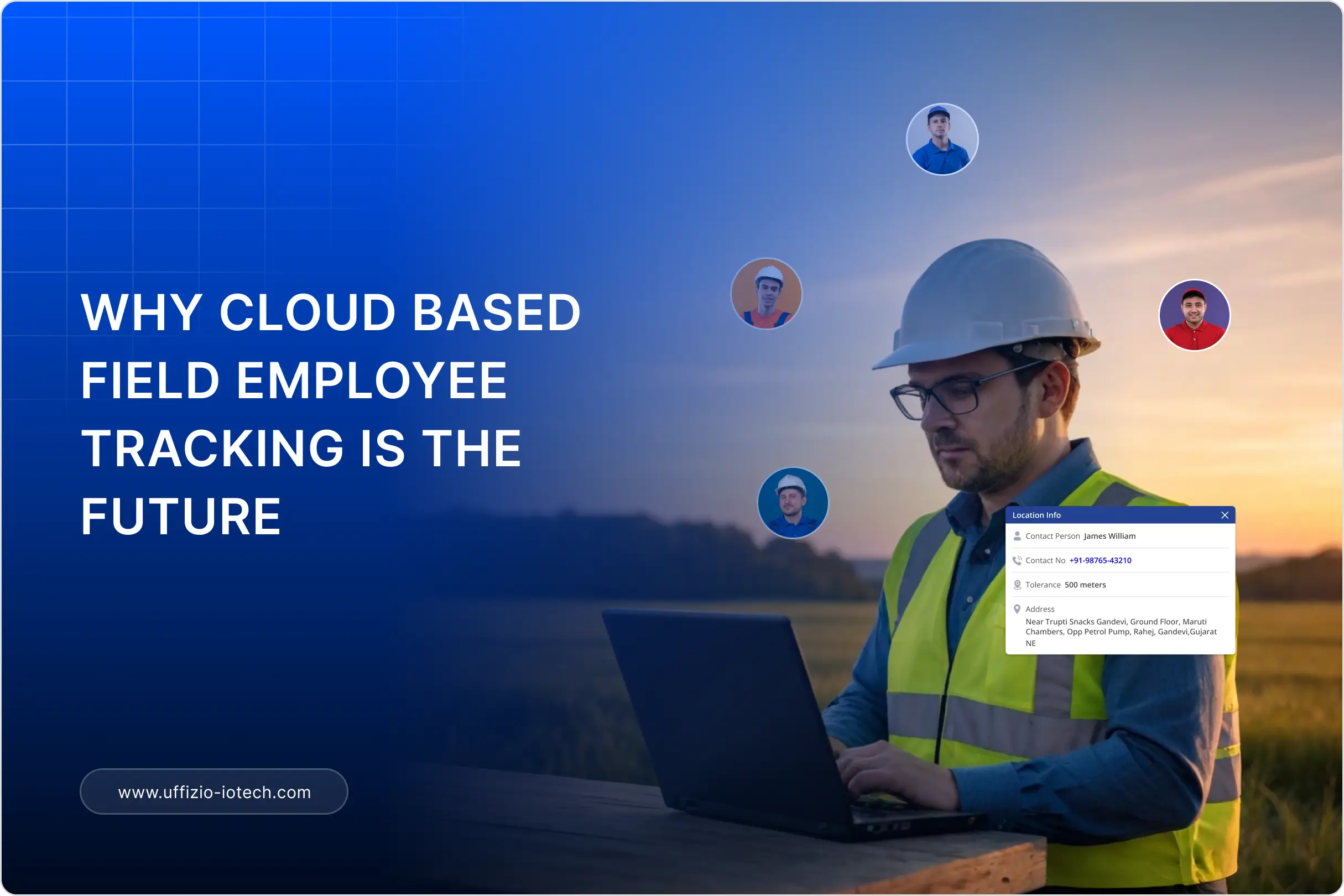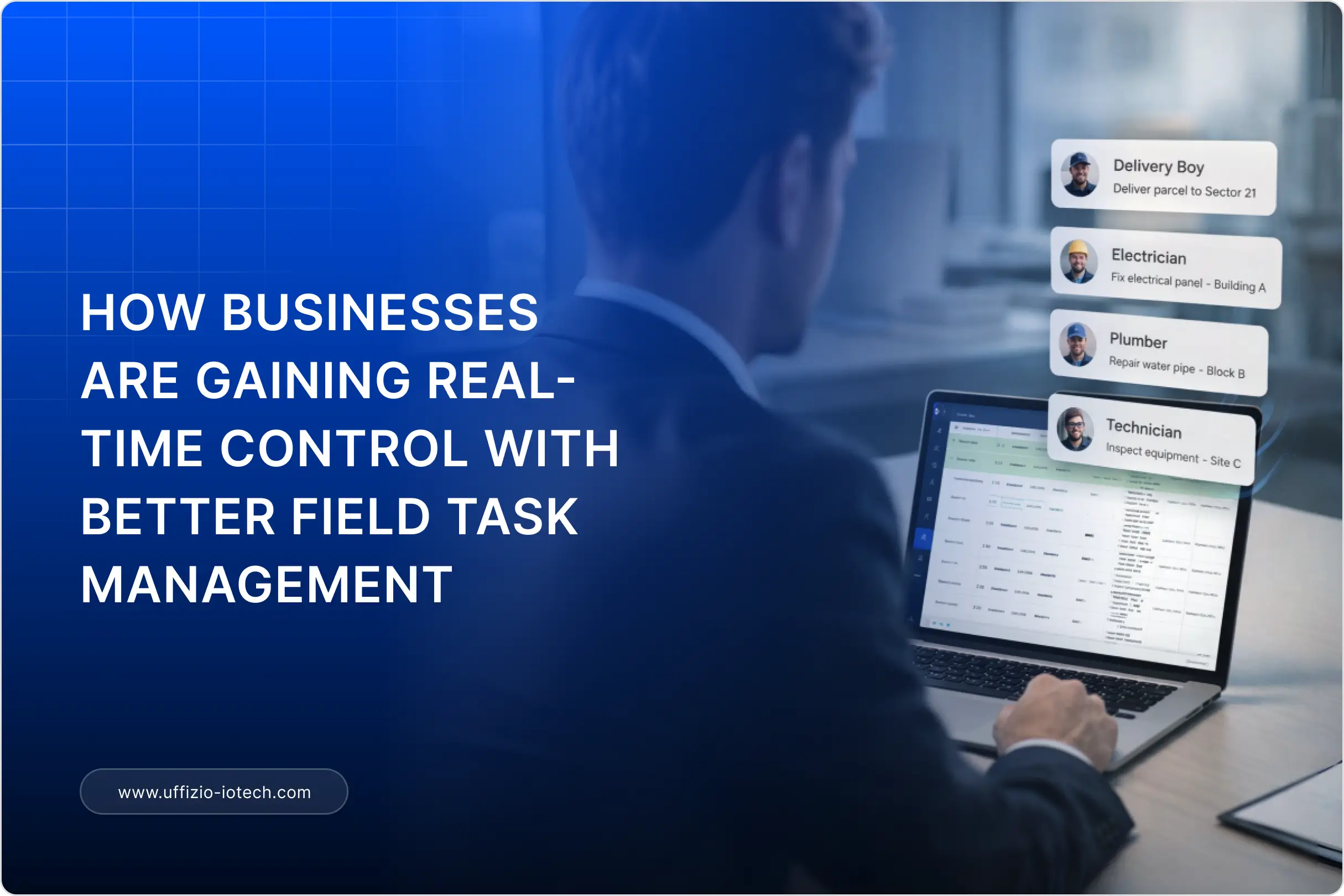
Traditional ways of managing field teams are barely keeping up in 2026. Real-time field staff monitoring is quickly becoming essential for businesses that need visibility and control. Between missed updates, scattered communication, and no visibility, your clients are operating on guesswork—and that’s risky.
Here’s the good news: as a system integrator, you can be the one to flip the script by introducing real-time field staff monitoring into your solution stack.
What Is Real-Time Field Staff Monitoring?
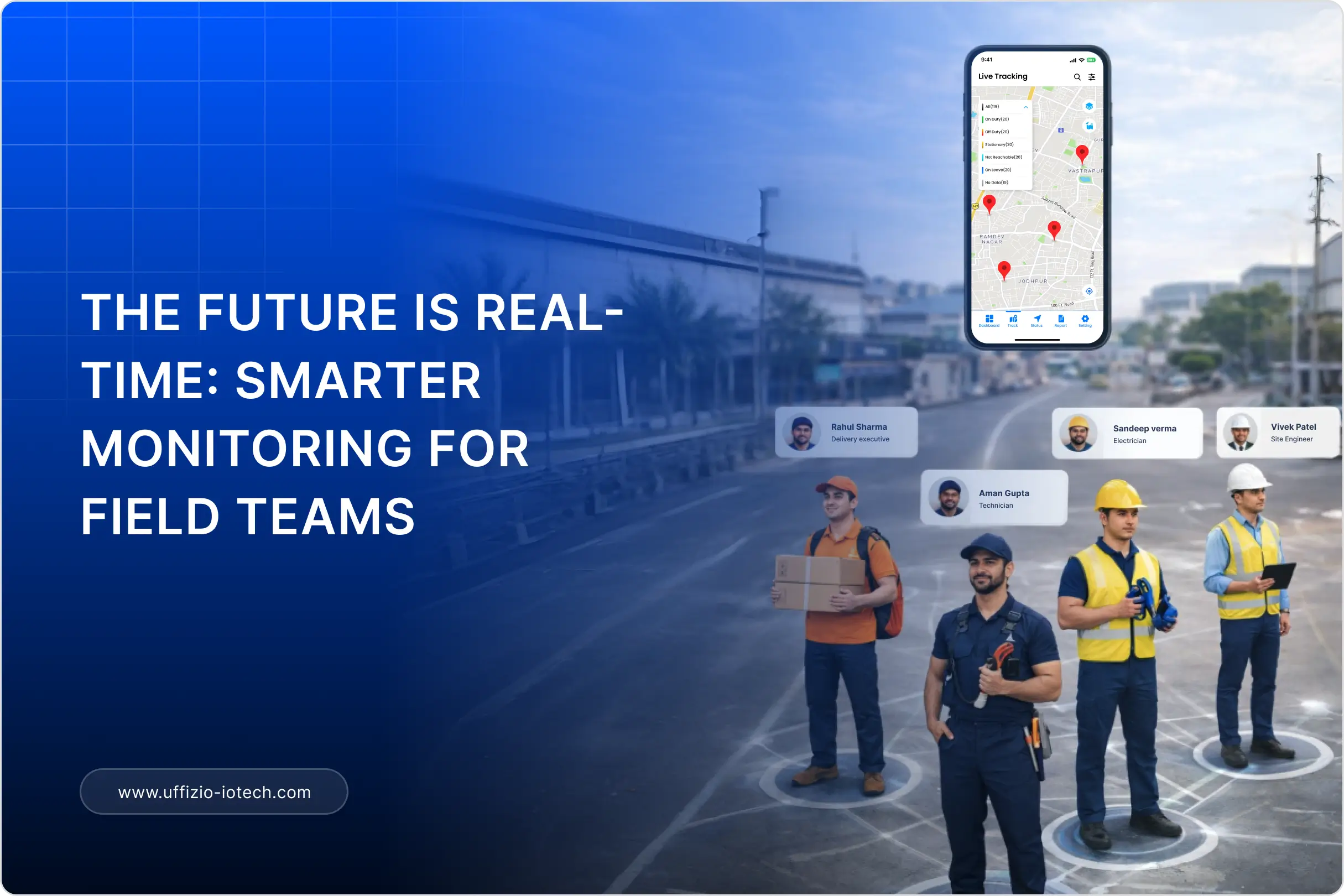
Real-time field staff monitoring is a system that tracks employee location, tasks, and activity instantly using GPS, mobile apps, and cloud technology. It helps businesses improve visibility, accountability, and operational efficiency.
At its core, real-time field staff monitoring is continuously tracking and managing mobile employees using connected systems.
It gives your clients live data on:
- Employee location
- Job status
- Time spent on-site
- Task progress
- Route history
- Emergencies or deviations
No need to wait for end-of-day updates. No need to guess who’s doing what. Everything is visible—as it happens.
How Real-Time Field Staff Monitoring Works
Real-time field staff monitoring works by combining GPS tracking, mobile applications, and cloud-based dashboards.
Key components of real-time field staff monitoring:
- GPS-based location tracking
- Task and job management
- Time and attendance logging
- Route and movement history
- Real-time alerts and notifications
Benefits of Real-Time Field Staff Monitoring for System Integrators
You’re not just implementing software—you’re delivering solutions. And real-time field staff monitoring checks all the boxes:
- High demand across industries
- Solves a visible operational problem
- Easy to integrate with existing tools
- Creates new revenue streams
- Enables add-on services like automation and analytics
If you want to future-proof your integration business, this is one solution you should include in your offering.
Where It Works: Use Cases That Sell Themselves
Wondering who really needs real-time field staff monitoring? The answer: almost every business with a mobile workforce.
1. Telecom and Cable Providers
Field engineers often work across multiple sites daily.
Solution: Track technician location and task progress in real time to improve SLA compliance.
2. Utilities and Energy Providers
Teams operate in remote and high-risk environments.
Solution: Monitor worker movement, ensure safety, and verify job completion instantly.
3. Facility Management Services
Staff are spread across multiple buildings and shifts.
Solution: Track attendance, movement, and boundary breaches automatically.
4. Logistics and Last-Mile Delivery
Delays and inefficiencies impact customer satisfaction.
Solution: Provide live driver tracking and instant alerts for deviations.
5. Construction and Infrastructure Projects
Large sites make workforce tracking difficult.
Solution: Enable real-time attendance tracking and optimize manpower usage.
Features to Look for (And Recommend)
Not all systems are built the same. The best real-time field staff monitoring platforms offer:
- Live GPS tracking
- Geo-fencing for attendance
- Task timers and job logs
- Emergency SOS alerts
- Battery-optimized mobile apps
- Offline data sync
- Role-based dashboards
- Audit logs and compliance reports
These features enhance visibility and control—core benefits of real-time field staff monitoring.
Real-Time Field Staff Monitoring vs Traditional Methods
| Traditional Methods | Real-Time Field Staff Monitoring |
|---|---|
| Manual check-ins via calls or messages | Auto-attendance with GPS validation |
| Delayed status updates | Live task and job progress tracking |
| No real-time visibility | Instant location and activity tracking |
| Paper-based or spreadsheet records | Digital logs with audit trails |
| Reactive issue handling | Instant alerts for delays or deviations |
| High chances of human error | Accurate, automated data collection |
| Limited accountability | Transparent and trackable performance |
| Time-consuming reporting | Automated reports and analytics |
With real-time field staff monitoring, you eliminate manual processes and improve accuracy instantly.
Data Privacy and Security: Yes, It’s Covered
Modern real-time field staff monitoring systems prioritize security with:
- Encrypted communication
- GDPR-compliant data handling
- Role-based access control
- Work-time-only tracking
- Consent-based usage
As a system integrator, you can guide clients on best practices like transparent policies and employee consent.
What’s in It for System Integrators?
Here’s how real-time field staff monitoring benefits you:
- Higher margins with value-based pricing
- Recurring revenue through SaaS models
- Stronger client relationships
- Faster sales cycles
- Opportunities for upselling additional services
It’s not just one integration—it’s a long-term growth opportunity.
Final Thoughts
In 2026, live data is becoming the backbone of field operations—and real-time field staff monitoring is how businesses access it.
As a system integrator, you’re in the perfect position to deliver this value. You understand systems, workflows, and integration—and now you have a solution that creates immediate impact.
Start now, and position yourself ahead of the competition.