
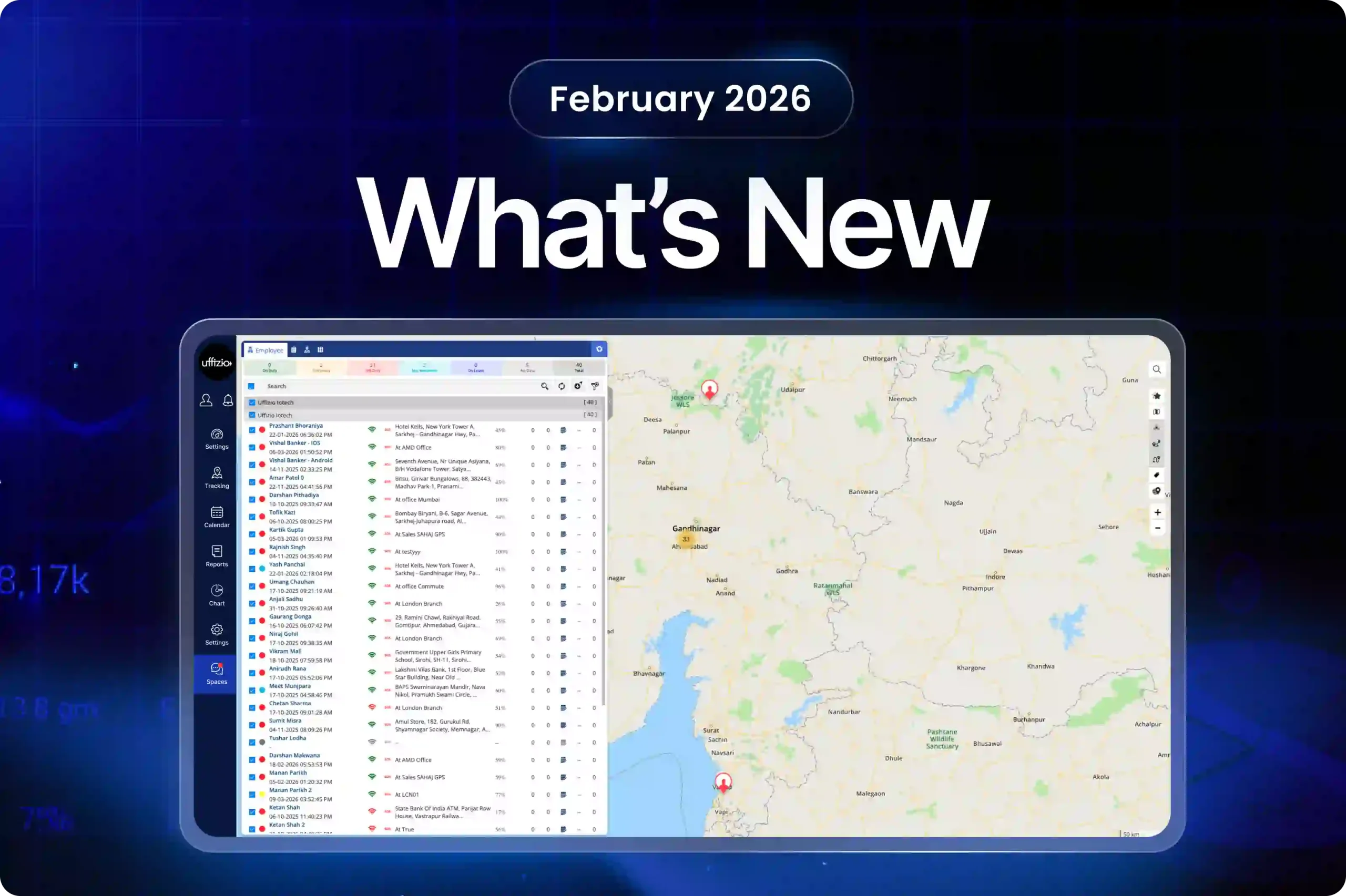
At Uffizio, we are continuously innovating and enhancing the solutions we build. Here, you will find the latest updates across our platform, from improved field tracking to efficient task management. With these ongoing improvements, we aim to help you transform your field operations into a competitive, highly efficient field workforce management system.
TASKEYE UPDATES
1. Track field team tasks with target-based achievement tracking
Gain a clear view of how field teams and their daily fieldwork contribute to the company’s growth.
Our employee task and target tracking system ensures that all targets and achievements are captured without the need for spreadsheets or manual follow-ups.
1.1 Set, track, and review team targets on the dashboard
We have added a centralised KRA (key result area) management system to the Web Dashboard to improve employee tasks and target assessments.
Now, setting clear targets and tracking achievements is easy with an advanced task and target monitoring system, as seen in image 1.1 (A).
Updated navigation for target management
Set and track monthly targets directly from
Settings > Master > Targets
What can be done now?
- Set targets for tasks, work hours, visits, deliveries, or sales.
- Assign specific KRA goals for individual employees or entire teams.
- Select specific task categories linked to system-defined task types.
- Define customised start and end dates for each target.
- Enter target values with relevant units, such as count, hours, or revenue.
- Add descriptions and supporting documents for better clarity.
Key target creation categories
The target creation form includes the following key settings as seen in image 1.1 (B):
1. Company, branch, and department – Select where the target should apply within the organisation.
2. Target assigned to – Choose one or more employees who will be responsible for achieving the target. A Select All option is also available.
3. Target name – Enter a clear name for the target. Only standard characters are allowed to keep names consistent.
4. Target category – Choose the appropriate target type from the predefined options: Tasks, Work Hours, Sales, Delivery, or Visit.
5. Unit – The system automatically sets the measurement unit based on the selected target category:
- Tasks, Deliveries, Visits → Count
- Work Hours → Time
- Sales → Revenue
6. Currency – For revenue-based targets, the system automatically uses the company’s default currency.
7. Target value – Enter the number that defines the goal. Decimal values are allowed for revenue-based targets.
8. Activation date and end date – Select the target’s start and end dates.
9. Description and supporting documents (optional) – Add extra details or upload documents if needed to provide more context for the target.
Note that the targets remain in draft until employees are assigned and the target end date is defined, and become active once this is done.
How does target achievement tracking work?
- The target becomes active.
- The system links targets with related task categories.
- Employees complete tasks.
- Achievements get updated automatically; no manual calculations are needed.
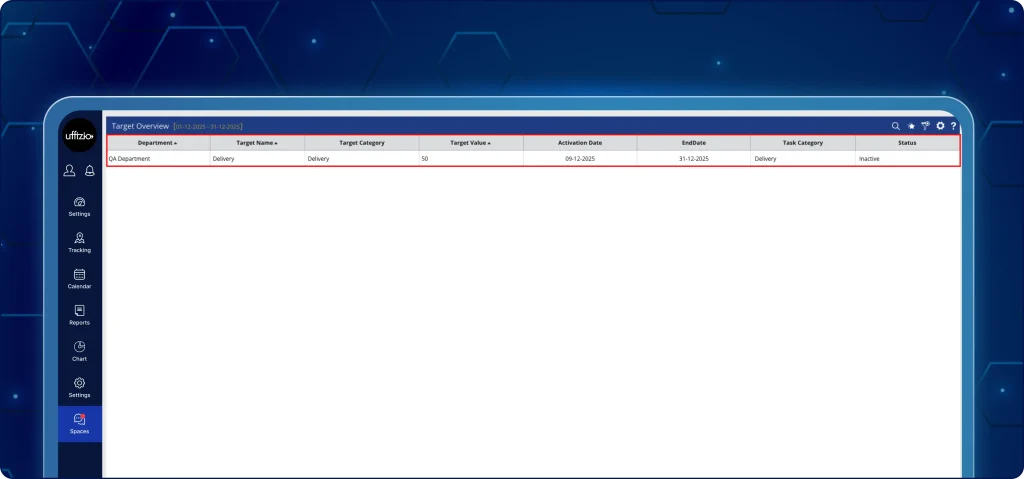
1.2 Target overview and completion status tracking
The target overview screen displays data in a systematic format, including:
- Company
- Branch
- Department
- Target name
- Target category
- Target value (including currency for revenue targets)
- Task category
- Activation date
- End date
- Status
Target status types
- Draft – No team member is assigned.
- Active – Team members are assigned, and the target completion is currently in progress.
- Inactive – The target period has ended.
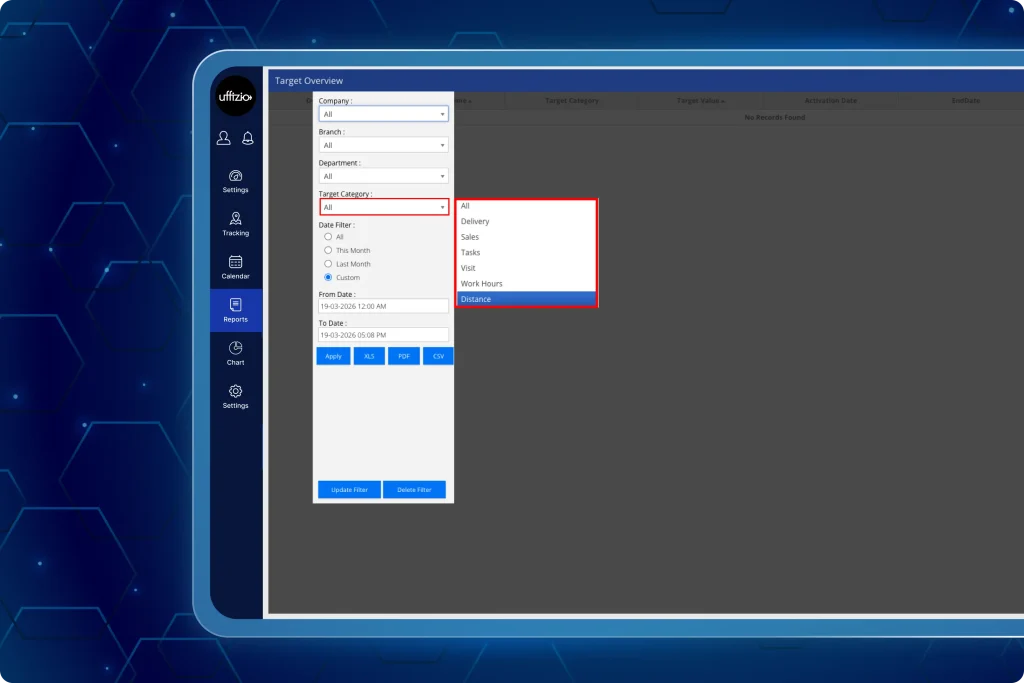
Filter targets using the following categories:
- Company
- Branch
- Department
- Target Category
- Date filters such as This Month, Last Month, or Custom range.
These filters help organisations review performance targets across departments.
1.3 Analyse target vs achievement reports
Now analyse target achievement progress using the dedicated productivity and achievement reporting section.
New navigation for viewing target progress
Access reports from:
Reports > Productivity and Target > Target vs Achievement.
This section provides both summary and detailed productivity insights as seen in image 1.3.
Summary report includes:
- Company
- Branch
- Department
- Team member name and number
- Target name
- Target category
- Task category
- Activation date and end date
- Target value
- Achieved value
- Achievement percentage
- Target archived date
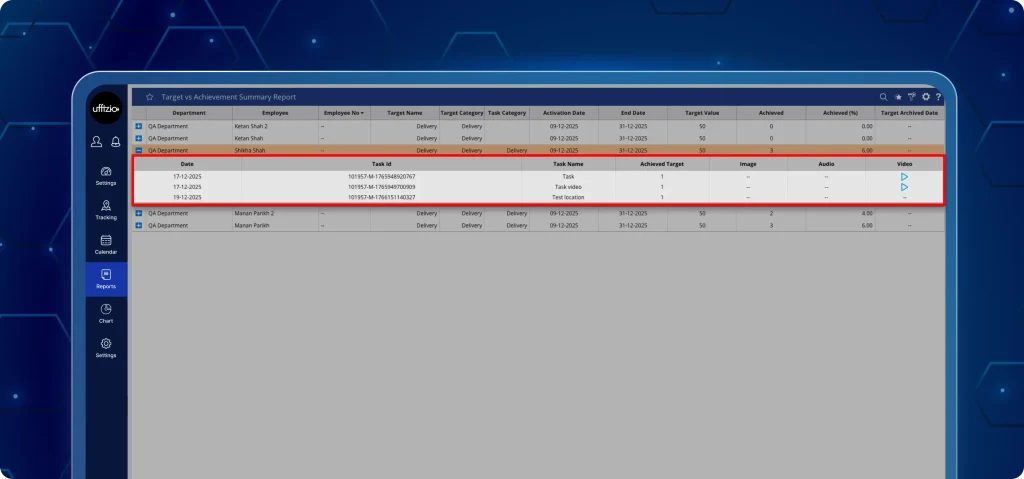
This allows management to quickly compare planned targets versus actual productivity.
Detailed activity record
Gain a detailed activity tracking record that shows:
- Date of activity
- Task name
- Achieved target value
- Verified task proof, such as: Images, audio, video, and more.
The system ensures that report values remain accurate and update quickly as new achievements are recorded.
What Has Improved?
- Advanced Date Filters: Match the Productivity Report logic (including 7-day minimum custom ranges).
- Unified Format: Scoring logic is standardised across all performance-related modules.
- Consolidated View: Stakeholders receive a single, accurate version of performance truth.
- Advanced date filters now match the Productivity Report logic.
- Report format now matches productivity scoring logic.
- Gain a consistent, unified performance view from the platform.
1.4 Set daily & distance-based targets effortlessly
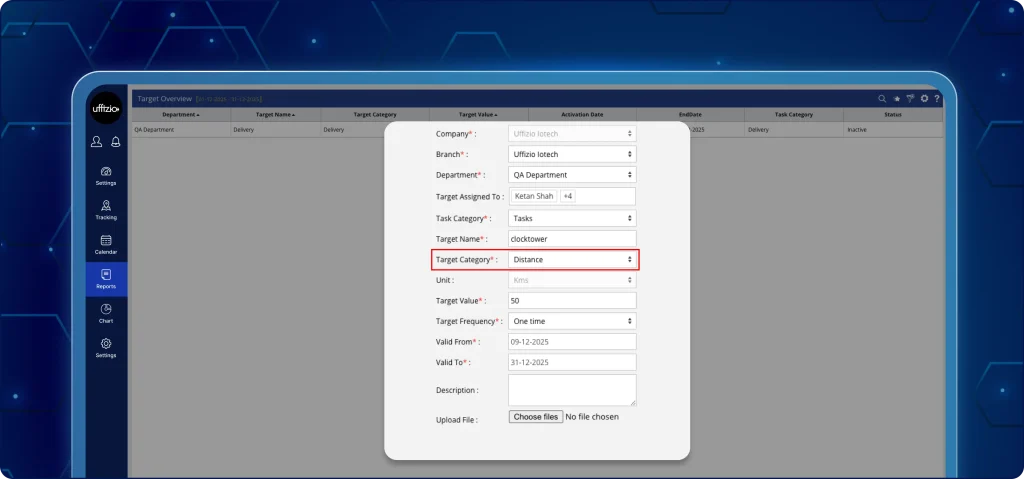
Distance travelled can now be included in the target measurement system as seen in Image 1.4 below. This ensures every on-field work is measured accurately.
New distance-based target navigation
Add Distance Travelled as a new target tracking category by navigating to
Settings > Master > Targets.
What can be done now?
- Add Distance as a new target category (Distance units are fixed to KM and automatically tracked).
- Set the target frequency: One-time, Daily, Weekly, or Monthly.
- Define start and end dates for each target.
1.5 Record achievements directly from the field
Field achievements can now be directly recorded through the TaskEye Employee App (available on Android and iOS).
This ensures that fieldwork is reflected instantly in performance reports for management to acknowledge.
What’s new in the app?
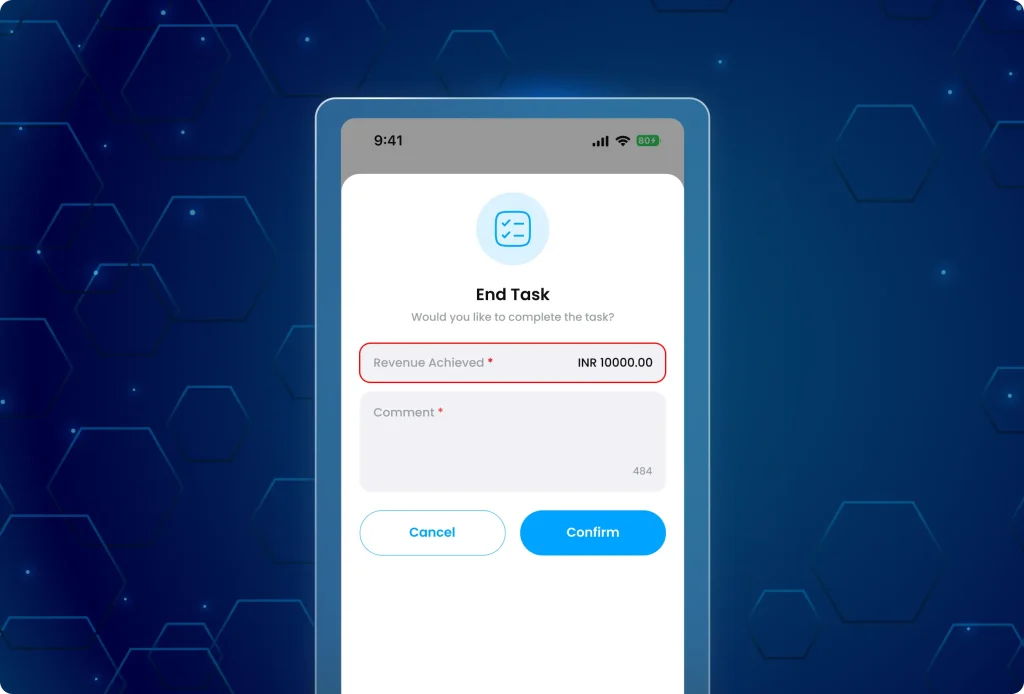
A new field has been added to the task completion form: Revenue Achieved as seen in image 1.5. This field allows team members to enter the actual revenue or achievement value associated with the completed task.
Revenue field conditions
- The field accepts numbers only, with up to two decimal places.
- The entered value must be zero or greater.
- The currency symbol shown will match the one set in the web dashboard.
- The field is visible only if a specific sales target is active.
- It is visible only to team members who are assigned to that target.
- It can be used for both “Task for Now” and “Task for Future” tasks.
What happens next?
- The team member completes the task and enters the achieved value.
- The data syncs instantly with the system.
- Target achievement values update automatically in reports.
- Admins can immediately see the updated progress.
Accurate targets. Clear performance.
- No more manual tracking or reporting errors.
- Targets and expectations are easy to understand.
- Work progress is tracked in real time.
- Field team performance reviews become faster and fairer.
- Easy to identify top performers and productivity gaps.
2. Track and manage employee shifts with an automated shift scheduler
Managing complex team schedules should not be a manual struggle. This update introduces a complete roster management solution that enables team shifts to be planned and managed from one place in advance.
Admins can now upload, view, and edit shifts in bulk, while field teams can see their weekly schedules with all leaves, holidays, and week-offs clearly marked.
2.1 Plan and monitor monthly shifts in one view
Monthly schedules can now be planned, shifts uploaded in bulk, and future shifts updated without manual coordination.
We have launched a centralised shift scheduler in settings to eliminate shift assignments one by one. Shifts update automatically in the monthly overview grid with no manual entry required as seen in the image 2.1.
This solution provides a single view of the organisation’s monthly shift schedule.
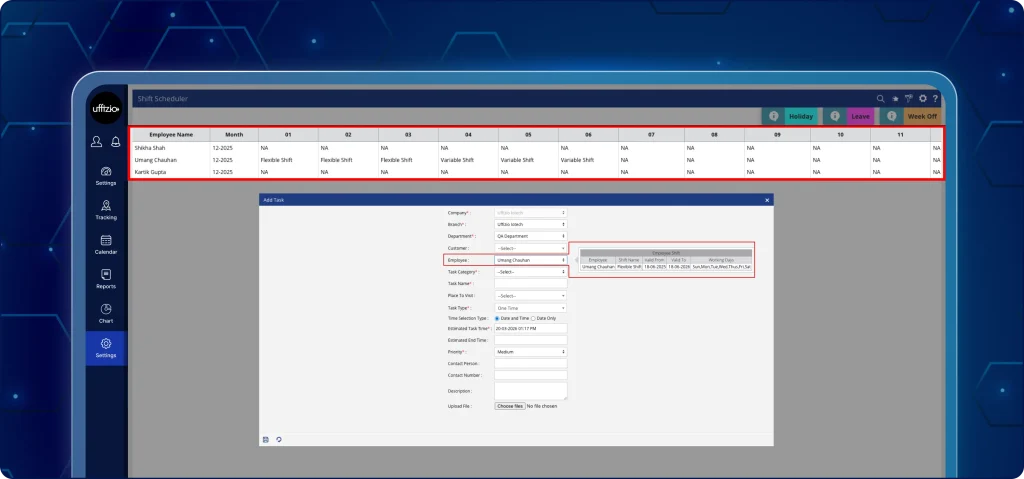
The platform allows management of employee monthly availability at
Settings > Master > Shift Scheduler.
What can be done now?
- Upload shift schedules for multiple employees at once.
- Assign shifts or week-offs for the full month using Excel.
- Eliminate manual daily shift entry.
- Lock editing of past shift dates.
- Click on any future date to edit a shift.
- View team-wise monthly shift schedule.
- Export roster to Excel or PDF.
- Assign a shift once and let it update automatically unless changed.
How does the shift scheduler work?
- Select Company, branch, department(optional), month, and year.
- Download the sample Excel file.
- Enter shift names or week-offs for each employee and date (one shift per day).
- Upload the completed Excel file using the bulk upload option.
- Go to the shift scheduler overview grid to view the full monthly schedule.
- Click on any future date to edit a shift if needed.
- Select a new shift or week-off from the pop-up and click save.
- Export the final shift data at any time using the export to Excel or export to PDF option.
2.2 Stay updated with the weekly shift calendar in the app
Team members can now view their weekly shifts in a clean calendar format as seen in the image 2.2. This ensures clarity on working days, weekends, holidays, and approved leaves.
All field team staff can access their mobile shift schedule directly from their profile. This visibility ensures everyone knows exactly when and where they are expected to work.
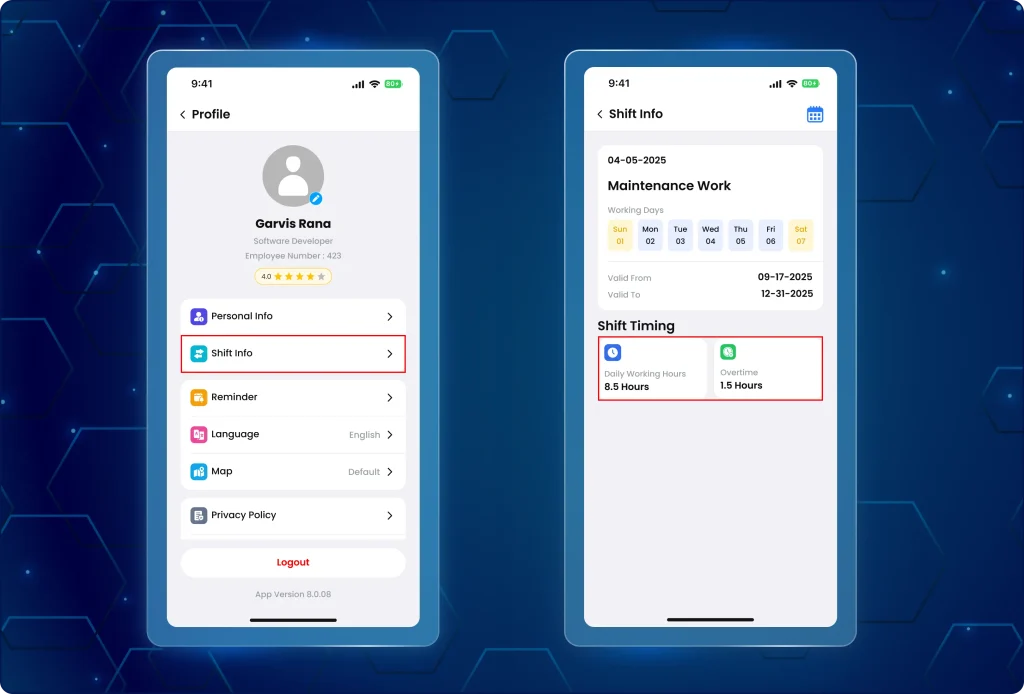
New shift schedule interface added in the app
View weekly working days, holidays, and leaves at
Profile > Shift Info in the TaskEye Employee App.
What has changed in the app?
- Navigate the weekly calendar view with navigation buttons: < Previous / > Next.
- The current week is displayed by default, with today’s date highlighted.
- Past dates have been disabled from editing.
- Future and current-day shifts are clickable to view.
What happens when shift dates are clicked?
- Working days shows the assigned shift.
- Week offs is presented as:
Title: “week off” and the message displayed is: “it is your weekly off.” - Holidays are displayed as:
Title: “holiday” and the message displayed is: “it is a holiday.” - Approved leaves are displayed as:
Title: “leave” and the message displayed is: “you are on leave on this day.”
Additional enhancements:
- Only approved leaves are displayed.
- The calendar clearly shows all assigned shifts.
- Past days remain non-editable to prevent confusion.
Centralised control. Simplified scheduling.
- Plan shifts in bulk using Excel and eliminate hours of manual entry.
- Monitor all field employee schedules in a single view.
- Update future shifts instantly with smart auto-update, unless changed.
- View accurate weekly shifts from the mobile devices.
- Week-offs, holidays, and approved leaves are clear and colour-coded.
- Save time, reduce errors, and improve operational efficiency with real-time shift updates.
3. Enable smarter attendance tracking with one-touch biometric login
Mark attendance faster and more securely with our updated biometric attendance login system. This update adds an additional layer to the existing manual, password-based attendance logging system.
Users now have a quicker, more secure, and one-touch way of marking attendance using fingerprint and face ID authentication.
3.1 Centralised biometric control from the dashboard
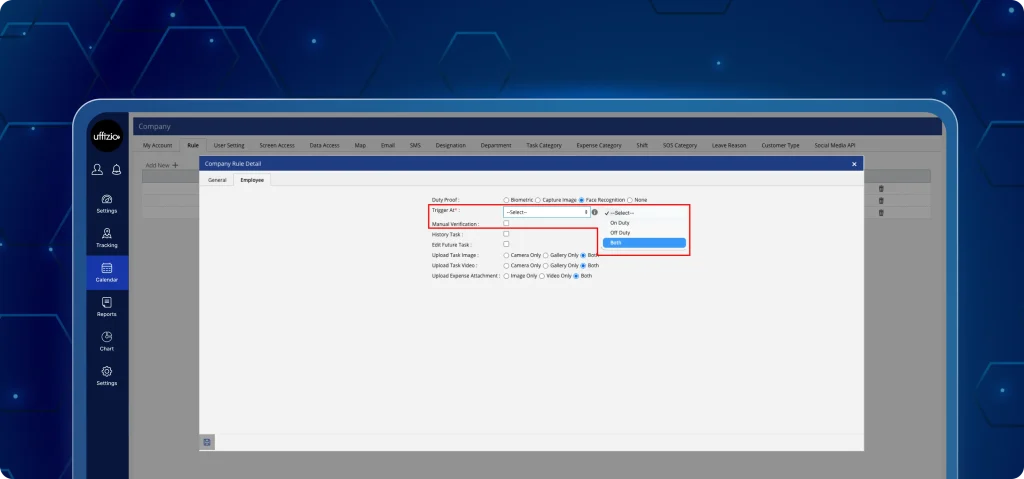
We have introduced a systematic authentication system as seen in the image 3.1. The additional attendance login system provides full control over how field teams access the platform.
Biometric login can be enabled or disabled at both the organisation and individual team levels. The device compatibility for biometric integration can also be checked.
New biometric authentication configuration
Manage organisation-wide or individual login rules at
Settings > General > Company > Rule > Employee.
What can be done now?
- Enable or disable biometric login for the entire company.
- Allow or restrict biometric login for individual users.
- Track successful and failed login attempts.
- View device compatibility and enrollment status (enrolled, not enrolled, or hardware not supported).
- Check biometric permission status in the permission widget (allowed / not allowed).
How does biometric login work?
- An admin enables the Biometric option for a company.
- Users receive a prompt to enable fingerprint / Face ID on their device.
- The system logs every attempt with a timestamp, device information, and user ID.
3.2 One-touch biometrics login from the TaskEye Employee App
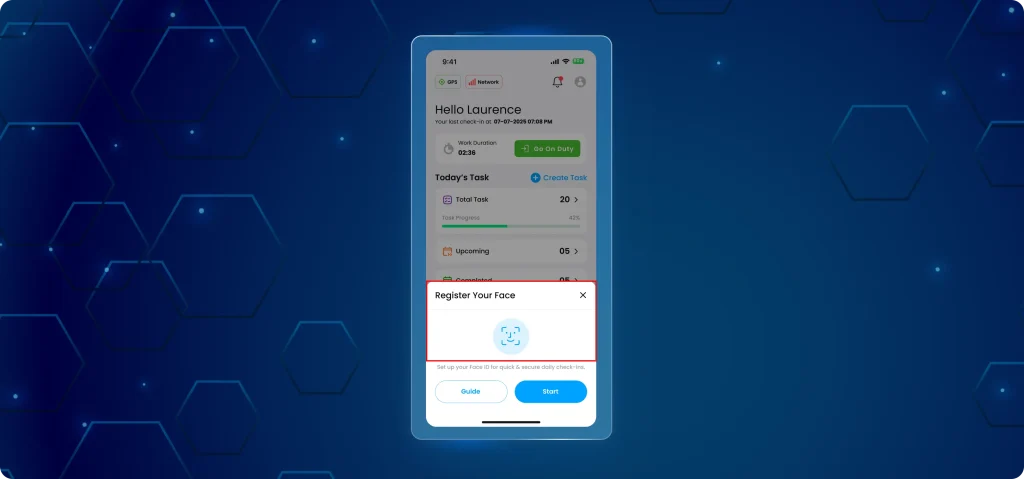
Users can now mark on duty / off duty quickly using fingerprint or Face ID as seen in the image 3.2.
By using the device’s built-in fingerprint or Face ID login, the TaskEye Employee App provides an efficient login experience while keeping data 100% private.
New mobile biometric login access
Enable fast login using fingerprint or Face ID on the
TaskEye Employee App > On Duty / Off Duty App Screen.
What’s new in the mobile app?
- Upgraded device’s login options with biometric options, including fingerprint and Face ID.
- Biometric setup is optional after the first mandatory manual login.
- Past attendance cannot be edited; check-in is restricted to the current date only.
- User-friendly messages are displayed when biometric credentials are not set up.
How do these updates work?
- Manual check-in remains the first attendance login requirement.
- If a biometric login attempt fails, the system redirects to a password /PIN login.
- After multiple failed attempts, the following message gets displayed: “Too many attempts. Please contact your manager to mark On Duty / Off Duty.”
- If an admin disables biometrics, the app automatically reverts to manual login.
Important note on privacy & security
- The TaskEye Employee App does not store fingerprint or face data.
- It only uses the phone’s built-in secure authentication system.
- The app just requests permission; all biometric processes are handled by the device’s Android or iOS system.
Instant check-ins. Increased protection.
- Save time with a one-touch login for employees.
- Improved login activity monitoring for admins.
- Faster field team login and attendance marking.
- Secure, optional biometric authentication.
- Admin-level control at both the company and individual employee levels.
- Clear visibility into device support for proper setup.
- Uses your device’s built-in security, so no biometric data (like fingerprint or face data) gets stored.
- Complete audit logging for compliance and tracking.
4. Optimise field movement with the new journey planner
Previously, there was no structured way to follow planned travel routes. The new journey planner module now allows teams to plan, assign, and optimise travel routes, improving task management.
This update introduces a complete journey planner module, allowing admins to create multi-stop journeys and monitor movement, keeping teams on track and aligned with assigned tasks.
4.1 Schedule and monitor journeys from the dashboard
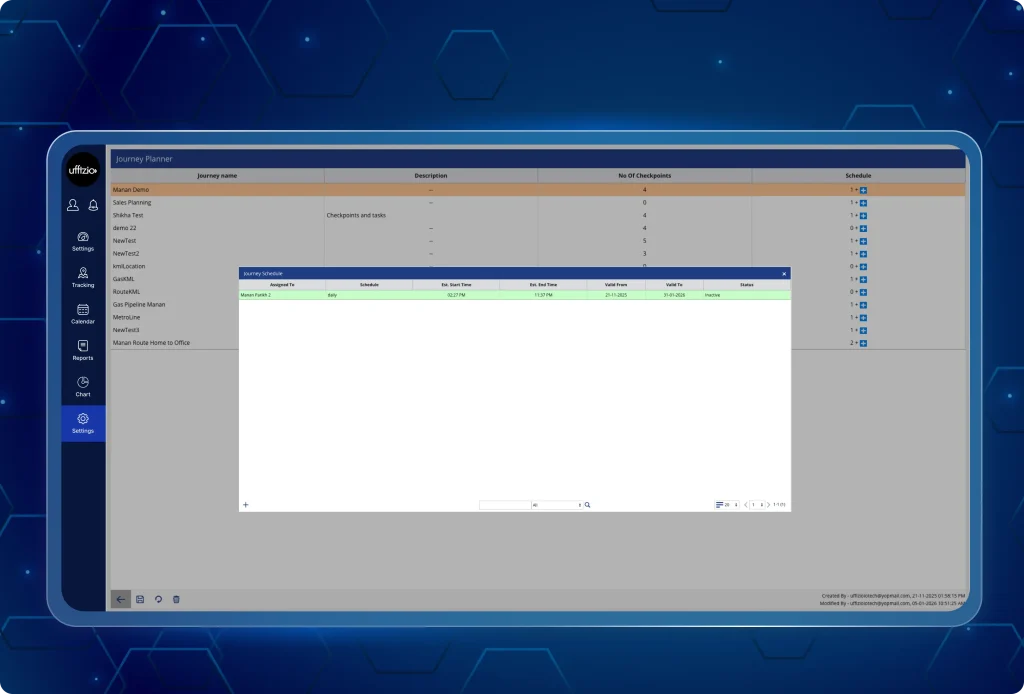
We have launched a centralised field journey planning system as seen in image 4.1. The journey planner reduces the gap between task management and location tracking.
This route-planning tool allows admins to plan an entire day’s movement on a single screen, assign routes, and automatically generate tasks linked to each checkpoint.
New Centralised Journey Planning Workflow
Create, assign, and manage multi-stop field routes with specific checkpoints at
Settings > Master > Journey Planner.
Journey details and checkpoints
- Company: First entry is selected by default; other companies can be chosen from the dropdown.
- Input methods: Map-based selection, address, or bulk upload.
- Map view: Tap to select locations; includes a search bar for searching by location.
- Select from address: Default selection given; dropdown listed with company addresses.
- Route deviation flexibility: Choose from 50m, 150m, 300m, 500m, 1000m.
- Add as address: Checkbox only visible in Map mode; added checkpoints also appear in the company’s global address list.
- Bulk upload: Upload KML (Keyhole Markup Language), address, or latitude/longitude files.
When KML files are invalid they show the error: “Invalid KML file. Please check the file format and content, and upload a valid KML file.”
What Can Be Done Now?
- Create named journeys and add multiple checkpoints.
- Select locations via the map-based journey planning screen or enter addresses manually.
- Upload checkpoints in bulk using KML files, address files, or latitude/longitude files.
- Assign journeys to teams, branches, or departments.
- Schedule journeys daily or weekly with start/end times and validity periods.
- Automatically generate tasks linked to each checkpoint.
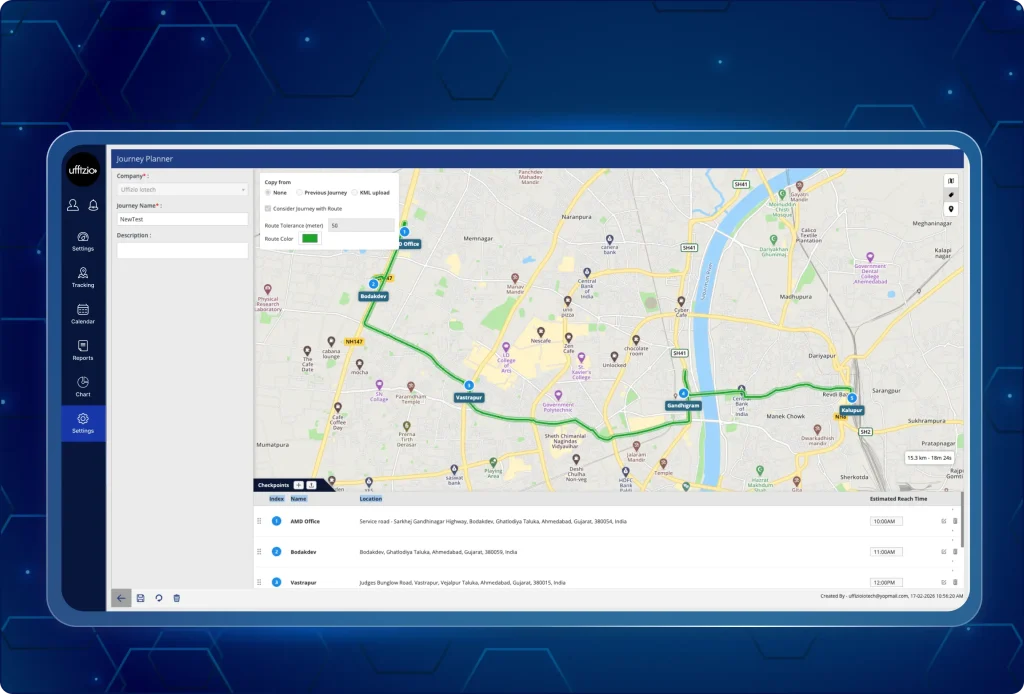
Image 4.2: Add checkpoints via map, address, or bulk upload via KML option to automatically generate tasks for your field team
How Does the Journey Planner Work?
See the navigation in the image 4.2 above.
- Create a journey.
- Add checkpoints via map, address, or bulk upload.
- Assign journey to teams, branches, or departments.
- Set the schedule (daily/weekly).
- Link tasks automatically to each checkpoint.
- Set a geolocation area around each checkpoint to automatically record arrivals when users enter.
- Use the “Copy From” feature to replicate successful past routes in seconds.
- Track journey status and completion in real time via the journey planner dashboard.
Guided routes. Guaranteed execution.
- Plan once, execute smoothly with optimised field movement.
- Save time with multi-stop route planning.
- Ensure accountability with journey-linked task execution.
- Improve efficiency with route tolerance and estimated arrival tracking.
- Gain better field oversight and centralised journey management.
- Easily copy previous journey routes for similar tasks.
- Shift from random visits to structured, journey-based planning.
- Reduce fuel costs and travel time through optimised checkpoint sequencing.
- Eliminate manual work by creating tasks automatically from journeys.
5. Faster task creation & global search with the new calendar view
We have introduced a new, faster, and more systematic way to create, find, and track tasks directly from our calendar view dashboard.
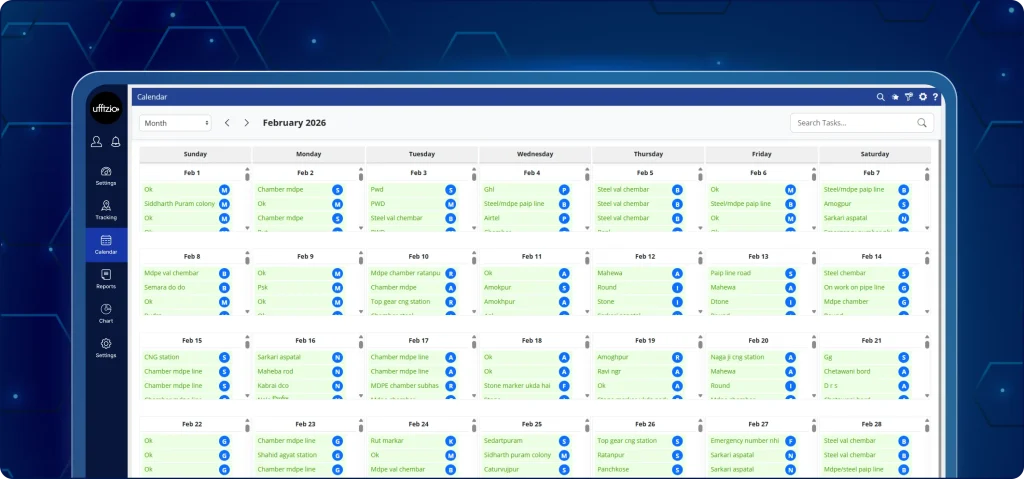
With the calendar view dashboard (as seen in the image 5 above) and global task search update, admins can:
- Add tasks instantly from calendar view.
- Search for them across systems using global task search.
- Track completed tasks in green without switching between tabs or searching for them manually.
5.1 Manage tasks faster from the calendar dashboard
The new calendar dashboard enables faster task creation, tracking, and management without switching between multiple tabs. From a single structured calendar dashboard, admins can:
- Schedule new tasks
- Track completed work
- Search system-wide tasks by Task Name or Task ID
- Edit upcoming or missed tasks directly from the calendar
New multi-task calendar navigation
Create, edit, and track daily tasks from a single structured view at
Manager Web App > Calendar.
What can be done now?
- Add tasks instantly by clicking on calendar cells.
- Search for any task across the entire system, with Task Name and Task ID.
- Identify completed tasks instantly through green colour coding.
- View actual vs. estimated timings via a detailed task popup.
- Control Calendar access with role-based permissions.
- Use the calendar in multiple languages.
- Edit missed or upcoming tasks directly from the calendar grid.
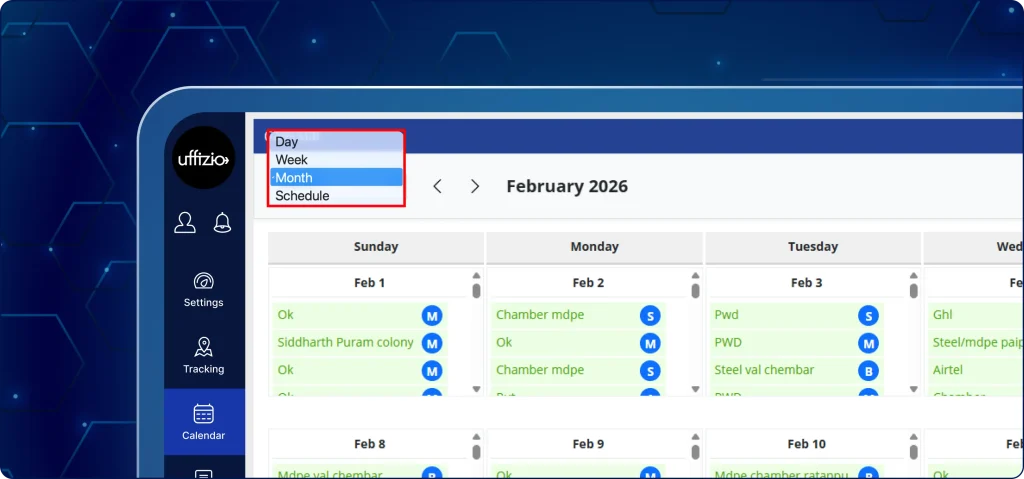
5.2 Completed tasks now appear in green
All tasks marked as completed now appear in green across:
- Day View
- Week View
- Month View
- Schedule View
Result:- As seen in the image 5.2 above, this provides instant visibility of finished work, enables faster task tracking, and shows a clear visual status.
5.3 Click any task to view detailed information
Get the detailed information on every task without opening the full task screen. Just follow the steps below:-
Step 1: Click on any task in the calendar.
Step 2: A status pop-up will open instantly.
Step 3: View the task timings and other details instantly
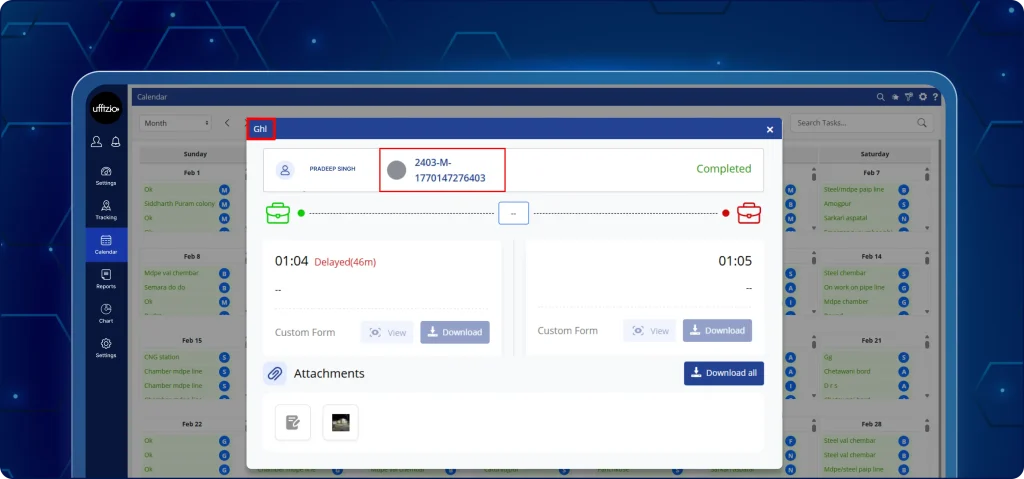
What appears in the pop-up?
As seen in the image 5.3 above,
For completed tasks, it shows:
- Actual start time
- Actual end time
For missed & upcoming tasks, it shows:
- Estimated start time
- Estimated end time
- Edit icon (to modify the task)
Note that the edit option is not available for completed tasks.
5.4 Quickly add tasks from the calendar
New tasks can now be created directly from the calendar grid as seen in the image 5.4.
Tasks can be edited as long as they are not marked complete. All current tasks can be edited, and future tasks can be scheduled.
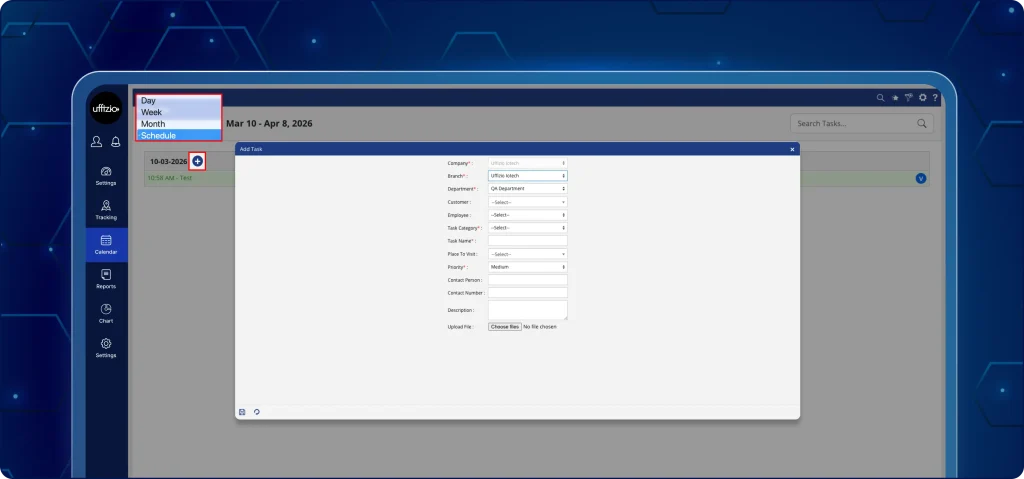
How does task creation work in each view?
- Day View
Click the empty time slot → the date will be auto-filled → the team members are auto-selected. - Week View
Click the date cell → the date will get auto-filled. - Month View
Click the date cell → the date will get auto-filled. - Schedule View
The “+” icon is visible for adding current & future dates → Click the “+” icon → The Add Task pop-up will open with the date pre-selected.
Result:- No manual date entry is required, allowing faster task creation.
5.5 Global task search across your entire system
Task search is now available across the entire system as seen in the image 5.5. It is not limited to visible tasks in the calendar.
Tasks can be searched by Task Name or Task ID.
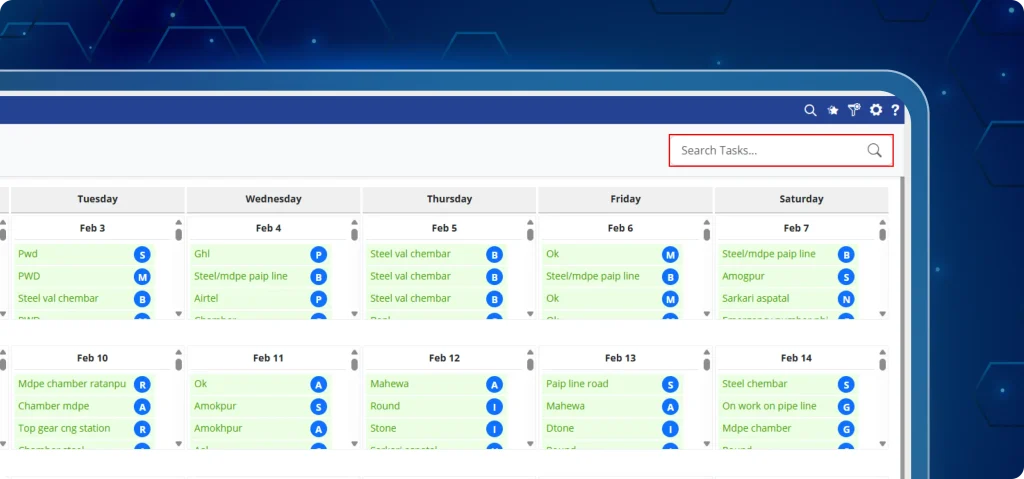
All assigned and updated tasks are searchable, even if they do not appear in the current calendar view. It provides instant access to any task, even if it is not visible on the current calendar view.
5.6 Clear tracking and faster updates with the TaskEye Employee App
Daily task tracking has become clearer and more organised through the TaskEye Mobile App.
Teams can now update their daily targets through a new calendar view mobile app interface as seen in the image 5.6.
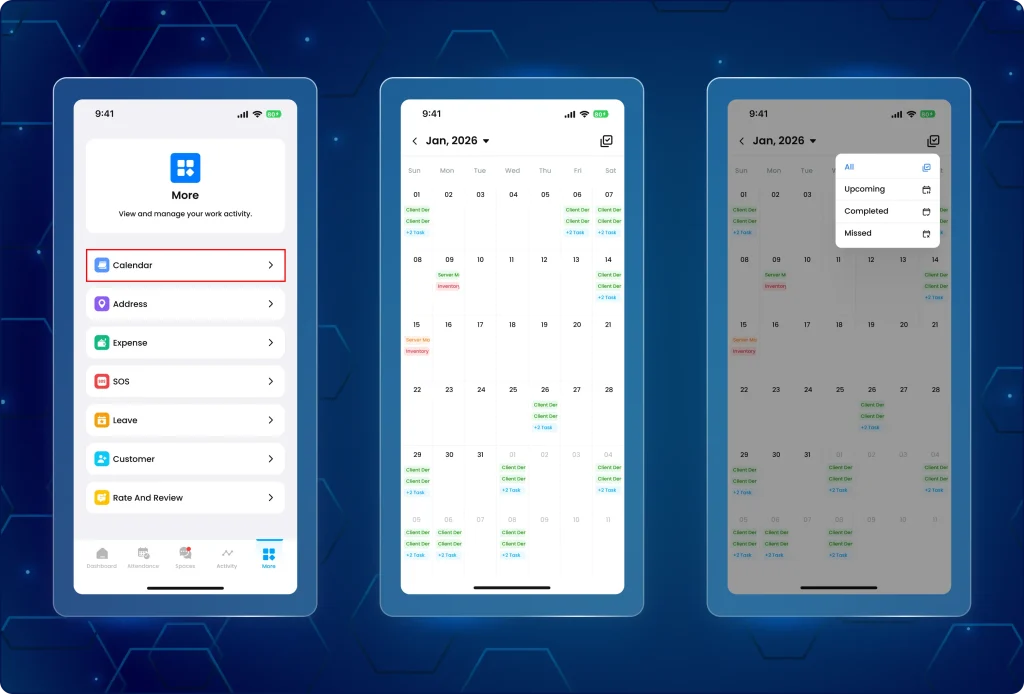
What has changed on the app?
- Completed tasks now appear in green, making it clear which tasks are finished and which are pending.
- One-tap task calendar view shows precise details about start and end times for every task.
- Multi-language translation support is now available for non-English speaking teams.
How does it work?
- Status updates go live immediately upon app refresh.
- Users can quickly add tasks in real time from the calendar view.
- Status colours update automatically based on task completion, so no extra steps are required.
One view. Total visibility.
- Faster task creation and clear visual tracking.
- Global system-wide search finds any task by ID in seconds.
- Pre-filled fields prevent date and assignment errors.
- Colour-coding task details provides an instant view of team productivity.
- Multi-language translation support eliminates task submission errors and miscommunications.